
From Cath Lab to AI Node: What 64 Terabytes Can Really Hold for UK Heart Data
A portable 64 TB SSD system can realistically store one full year of major UK heart surgeries or 2–3 years of curated complex cardiac cases — making it an ideal edge node for AI-driven diagnostics, risk prediction, and outcomes research in British cardiology.
HEALTHCARE
Peter Thomas / Mark Wharton
1/14/20263 min read
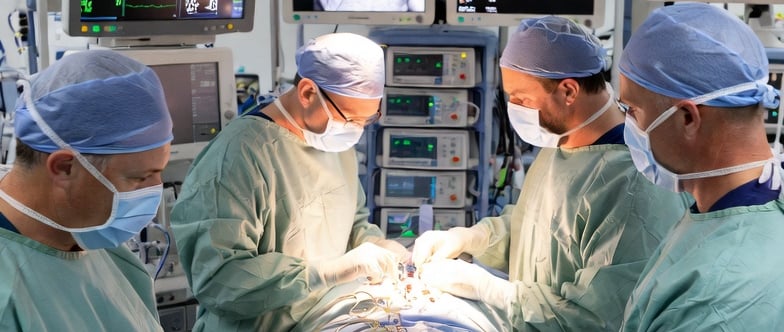
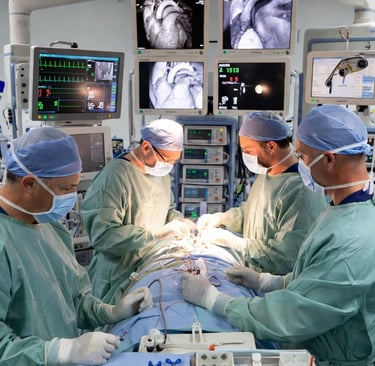
The UK faces a significant burden from cardiovascular diseases, with heart-related conditions driving substantial healthcare activity and data generation. A compact, high-capacity storage solution like the Tsecond BLOCK - 2U SSD system—offering 64 TB (or up to 128 TB) of usable capacity—provides a portable or laptop-pluggable option ideal for edge or regional use. This makes it particularly relevant for handling curated cardiac datasets in research, AI development, or clinical analytics within the United Kingdom.
UK Cardiac Activity Overview (Approximate Recent Figures)
The UK population stands at around 69.5 million (mid-2025 estimates).
Major cardiac surgeries (e.g., CABG, valve replacements, and related procedures): Approximately 30,000–35,000 adult operations annually in recent years, based on national audits (e.g., NICOR and SCTS reports showing around 34,000 average pre-pandemic, with fluctuations due to COVID impacts and recovery trends).
Percutaneous coronary interventions (PCI) and cardiac catheterisations: Roughly 100,000–110,000 PCIs per year in recent data, with rates around 1,400–1,500 per million population.
High-risk cardiac admissions (e.g., myocardial infarction/heart attacks, heart failure, severe arrhythmias): Around 100,000 hospital admissions annually for heart attacks alone, contributing to broader high-risk cardiac cases exceeding 200,000 when including related conditions.
These figures generate vast amounts of multimodal data, from electronic health records to advanced imaging.
Typical Data Sizes per Cardiac Case
Cardiac cases produce diverse data types, with sizes varying by complexity:
EHR notes, lab results, standard ECGs: 50–200 MB
Echocardiography (echo) studies: 200–800 MB (often cine loops and stills)
CT or cardiac MRI (when performed): 500 MB – 2 GB (high-resolution volumetric imaging)
Cath lab/angiography videos and sequences: 1–5 GB (fluoroscopy runs, cine acquisitions)
Surgical/ICU monitoring (waveforms, telemetry): 0.5–2 GB
A realistic average total per comprehensive case lands at 1–2 GB, though simpler cases may be under 500 MB and complex ones (with full multimodality imaging) can exceed 5 GB. Compression and AI-optimised preprocessing can reduce effective sizes significantly.
Storage Capacity Scenarios with 64 TB
A 64 TB system strikes a balance for focused, high-value UK cardiac datasets—suitable for national/regional AI nodes, research consortia, or outcomes modelling.
Scenario A: Major heart surgery focus
Targeting ~35,000 annual major surgeries at ~1.5 GB per case yields ~52.5 TB total.
→ A 64 TB system comfortably stores one full recent year's worth of UK major cardiac surgery data (with room for metadata or annotations).Scenario B: Complex/selected high-risk cases
Curating 25,000–30,000 complex cases (e.g., those with multimodality imaging or poor outcomes) at ~2 GB each totals 50–60 TB.
→ Ideal for targeted AI training datasets, predictive modelling, or comparative effectiveness studies across UK centres.Scenario C: AI-optimised and compressed datasets
Using efficient compression, de-identification, and selective retention (e.g., key sequences only), average size drops to 500 MB per case.
→ 64 TB enables storage of 120,000–130,000 cases—equivalent to 2–3+ years of major UK surgery data or a broader mix of interventions and admissions.
These capacities make the system highly practical for "pocket" or plug-in deployment—e.g., in research laptops, mobile analytics units, or secure edge nodes—without needing full datacenter infrastructure.
What 64 TB Cannot Realistically Store
The entire national cardiac imaging archive (millions of studies across decades).
Raw, uncompressed cath-lab videos for all ~100,000+ annual interventions.
Multi-year, full-resolution national datasets including every ECG, echo, and admission.
Such comprehensive archives demand petabyte-scale systems, like Tsecond’s larger BRYCK platform, designed for hyperscale edge-to-core workloads.
Strategic Value for UK Cardiac AI and Research
A 64 TB SSD system excels as a national or regional cardiac AI node. It supports:
Curated, high-quality datasets for training AI models in diagnostics, risk stratification, or outcome prediction.
Secure, portable storage for collaborative projects (e.g., NHS trusts, universities, or BHF-funded research).
Edge-based decision support, where AI processes local data before syncing summaries to central systems.
In an era of growing AI adoption in cardiology, this capacity bridges the gap between raw clinical data explosion and practical, deployable intelligence—empowering faster insights without petabyte-level overhead. For broader national efforts, scaling to BRYCK or hybrid architectures remains essential.
Contact us for more details ...
Contact
Get in touch for tailored data solutions
sales@dtcaisolutions.com
© 2025. All rights reserved.